
Ricky Valido South Florida PBS
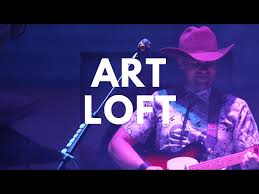
Ricky Valido Is Rewriting Country Music From the Southern Edge of America There ara Inside the world of a South Florida songwriter blending Americana tradition, environmental storytelling, and the evolving sound of The Hialeah Hillbillies By the time the first guitar chord cuts through the humid South Florida air at a Ricky Valido show, something is already clear: this is not a performance built on imitation. It is not a borrowed tradition. It is not a Nashville export filtered through palm trees. It is something else entirely. stories that begin quietly, almost unnoticeably, with no hint of the greatness they will one day become. Ricky Valido’s story starts like that — not with a spotlight, not with a stage, not with applause — but with an eight-year-old boy in Hialeah holding a guitar gifted by his great-grandmother. A simple gesture, rooted in love and cultural inheritance, that unknowingly set into motion a journey that would lead to one of the most prestigious honors in storytelling and broadcast: an Emmy Award. This is the story of how a Cuban-American kid from South Florida — raised by the rhythms of Hialeah, the grit of immigrant families, and the soul of the Everglades — grew into a songwriter, a storyteller, a cultural pioneer… and now, an Emmy-winning artist whose influence is shaping the future of music. Ricky Valido, a South Florida-born singer-songwriter with deep family roots in Hialeah, is steadily carving out a space in American country music that feels both familiar and quietly disruptive. Backed by his band, The Hialeah Hillbillies, Valido is building a body of work that blends traditional country, honky tonk, folk storytelling, rock-and-roll grit, and Americana sensibilities—while anchoring it all in a distinctly Floridian worldview. In an era where genre lines continue to blur, Valido’s approach is not about fusion for novelty’s sake. It is about identity. Geography. Memory. And responsibility. A Sound Born Between Worlds Valido’s musical foundation didn’t begin in a single place—it was assembled over time, like a patchwork quilt of cultural influence. Growing up in South Florida, he absorbed storytelling from multiple directions at once. Classic Western films taught him silence and tension. Latin American telenovelas taught him drama and emotional cadence. Family vinyl records introduced him to the foundational architects of country songwriting: Johnny Cash, Marty Robbins, Kris Kristofferson, and others who built their careers on narrative clarity and emotional honesty. That duality—cinematic storytelling on one hand, raw musical minimalism on the other—forms the backbone of Valido’s writing today. His songs often feel like short films: character-driven, visually grounded, and emotionally specific. A love song may carry the dust of a rural road. A heartbreak song may feel like a storm rolling in over the Everglades. Even his most straightforward country arrangements carry an undercurrent of place—South Florida not as backdrop, but as living, breathing character. It is a region more often associated with Latin pop, hip-hop, and tropical genres than country music. That tension is not something Valido avoids. It is something he leans into. The Hialeah Hillbillies: Identity as a Band Concept At the center of Valido’s artistic identity is his band, The Hialeah Hillbillies, a name that functions as both declaration and provocation. On its surface, it’s playful—an unexpected pairing of rural Americana imagery with the dense suburban sprawl of Hialeah, Florida. But in practice, it is also a statement about cultural hybridity: the idea that country music does not belong to a single geography, accent, or lineage. Onstage, The Hialeah Hillbillies operate less like a backing band and more like an extension of Valido’s storytelling voice. The performances are built around dynamics rather than spectacle—tight arrangements, lived-in instrumentation, and a sense of looseness that allows the songs to breathe. There is a familiarity to it, but also a refusal to fully conform to expectation. It is country music filtered through South Florida humidity, bilingual rhythm, and the lived experience of a region often left out of the genre’s dominant narrative. Country Music From the Edge of the Map In American music history, country has often been framed through specific geographies: Nashville, Texas, Appalachia, the Midwest plains. South Florida rarely appears in that lineage. Valido is not attempting to correct that history with confrontation. Instead, he expands it by presence. His work suggests a simple but powerful idea: that country music is not defined solely by region, but by storytelling, lived experience, and emotional truth. In that sense, South Florida becomes not an outlier, but an extension of the tradition—just one that has rarely been amplified in the national conversation. This positioning gives Valido’s work a subtle but persistent tension. His songs carry both reverence for country tradition and an awareness that tradition is not fixed—it evolves, absorbs, and reinterprets. And in his case, it absorbs the Everglades. The Everglades as Muse, Memory, and Warning If geography is central to Valido’s artistry, the Florida Everglades sit at its emotional core. With an academic background in environmental science and education, Valido brings a perspective to songwriting that extends beyond metaphor. His connection to the natural world is not symbolic—it is studied, observed, and personal. That relationship becomes most explicit in his upcoming concept project, “Dear Everglades,” a body of work that functions as both album and environmental statement. Rather than treating nature as romantic backdrop, Valido frames it as a living system under pressure—fragile, resilient, and deeply intertwined with human behavior. The Everglades in his writing are not abstracted into poetry alone. They are present as ecosystem, memory, and warning. Water levels, wildlife displacement, and ecological tension become part of the emotional vocabulary of the songs. In a broader cultural context, this positions Valido within a lineage of artists who have used music as documentation as much as expression—bridging the space between art and civic awareness without sacrificing musicality. Storytelling as Responsibility There is a tendency in modern music discourse to treat authenticity as